
- Tailbone pain lasting more than 2–3 months that is worst when sitting, rising from a chair, or during a bowel movement, and tender when the coccyx is pressed
- Tailbone pain after a fall onto the buttocks, childbirth, or a long period of sitting on hard surfaces, that has not settled with a cushion, anti-inflammatories and pelvic floor therapy
- Burning or aching pain in the perineum, anus, rectum, vagina or scrotum after gynecologic, urologic or colorectal evaluation has found no treatable cause
- Pelvic cancer pain of the rectum, anus, vulva or cervix that opioids control poorly or with too many side effects
- Persistent pain after coccygectomy (surgical removal of the tailbone)
Nerve blocks & ablation
Ganglion Impar Block
Ganglion impar block in Houston for coccydynia (tailbone pain) and perineal or rectal pain: transsacrococcygeal technique, risks, relief, RFA.
In short
A ganglion impar block is an X-ray-guided injection of local anesthetic, usually with a steroid, around the ganglion impar, a single small nerve cluster that sits just in front of the joint between the sacrum and the tailbone and collects pain signals from the coccyx, perineum, rectum and lower pelvic organs. It is the main injection for coccydynia (tailbone pain) and for perineal or rectal pain, including pain from pelvic cancers. It is both a test and a treatment: the first block shows whether the ganglion carries your pain, and relief lasting weeks to months makes it a treatment or leads to radiofrequency ablation of the same target.
Key facts
| Treats | Coccydynia (tailbone pain after a fall, childbirth, prolonged sitting or with no clear cause); perineal, rectal, vaginal or scrotal pain without a treatable structural cause; pelvic cancer pain of the rectum, anus, vulva or cervix |
|---|---|
| Test or treatment? | Both. Anesthetic alone is a test: relief for 2–8 hours while sitting confirms the target. Anesthetic with steroid is a treatment. A positive test can lead to impar radiofrequency ablation or, for cancer pain, neurolysis. |
| Procedure time | 10–15 minutes; about 45–60 minutes in the office |
| Anesthesia | Local at the skin; light sedation optional |
| Downtime | Same-day discharge. Sit on a cushion and avoid long sitting for 2–3 days. No driving for 24 hours if sedated. |
| When relief starts | Anesthetic within 10–20 minutes; steroid over 3–7 days |
| How long relief lasts | Typically weeks to a few months after a steroid block; varies widely. RFA after a positive block: typically 6 months or longer. Neurolysis for cancer pain: months. |
| How often it can be repeated | Steroid blocks typically no more than 3–4 per year; many patients need 2–3 blocks in the first months |
| Insurance | Covered for coccydynia and pelvic pain with documented exam and prior conservative care; RFA usually requires a positive block first |
Who it is for
- Tailbone or rectal pain that has not been examined: a rectal exam and, often, imaging come first to rule out a fracture, abscess, tumor or pilonidal disease
- Active infection near the tailbone, anus or perineum (abscess, fistula, pilonidal cyst), because the needle path is close to the rectum
- Bleeding disorders or blood thinners that cannot be held for a spine-adjacent block
- Uncontrolled diabetes if a steroid is planned
- Pregnancy, because fluoroscopy is required
- Pain from the sacroiliac joints or low back, which the block does not treat
The ganglion impar and the transsacrococcygeal approach
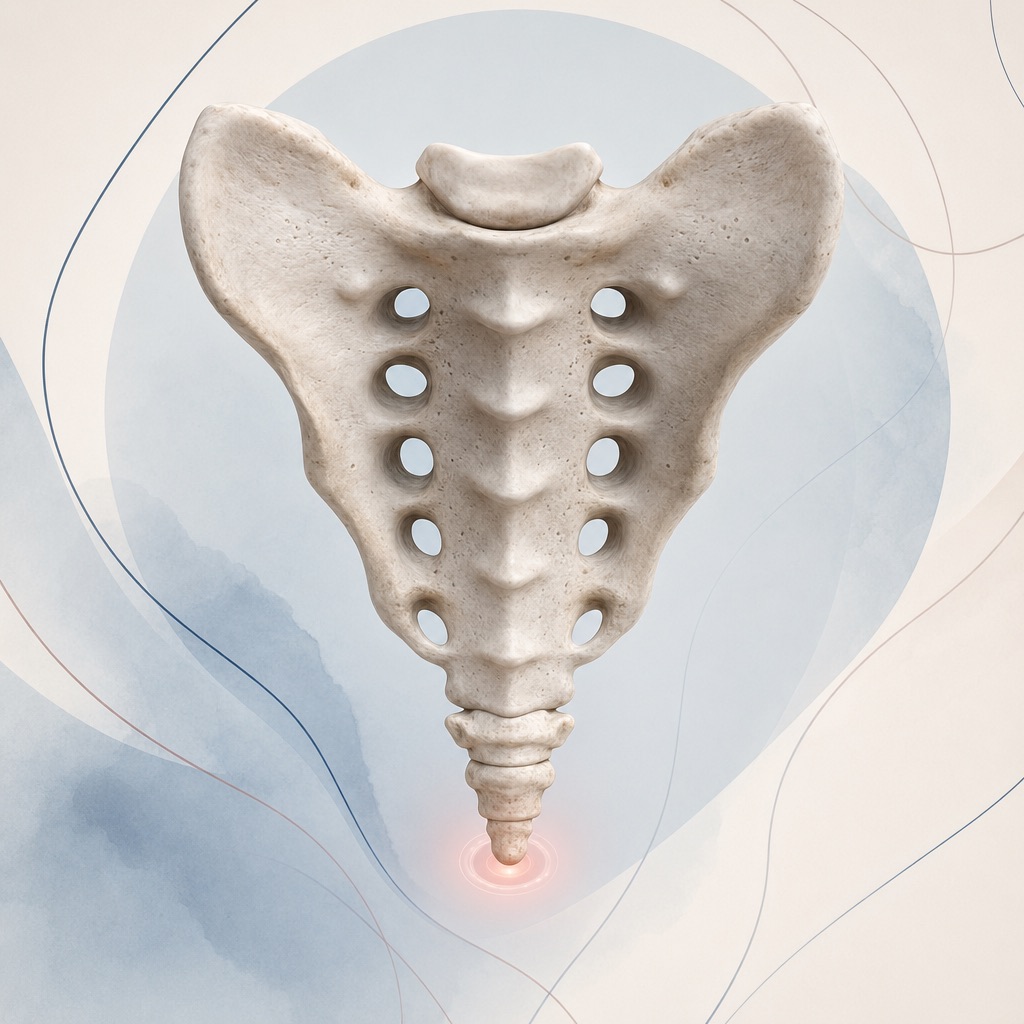
The sympathetic chains that run down each side of the spine meet at the very bottom in a single ganglion, the ganglion impar (also called the ganglion of Walther). It lies directly in front of the joint between the sacrum and the coccyx, behind the rectum. It carries pain signals from the coccyx and its ligaments, the perineum, the anus and lower rectum, the distal urethra and vagina, and the scrotum or vulva. Because so much of the lower pelvis reports through this one small target, one well-placed injection can quiet a wide area.
Transsacrococcygeal approach. The original technique bent a needle and threaded it up from below the tailbone, which was awkward and hard to control. Today the standard is to pass a thin needle straight through the disc between the sacrum and the coccyx under fluoroscopy, so the tip comes to rest exactly in front of the joint where the ganglion sits. Contrast dye then spreads in a characteristic curved pattern along the front of the sacrum and coccyx, confirming the position and showing that the tip is not in the rectum or a vessel. This approach is quick, needs only 3–5 mL of medication, and keeps the needle away from the rectum by staying in bone until the last few millimeters. If the sacrococcygeal joint is fused, we go through the joint between the first and second coccygeal segments instead.
Test or treatment. Anesthetic alone is a test: sit, stand and press on the tailbone for the next few hours and rate the pain. If it drops by 50% or more, the ganglion is the pathway. Most first blocks include a steroid so the test doubles as a treatment; relief then typically lasts weeks to a few months, sometimes much longer. Coccydynia is usually caused by a hypermobile or dislocating coccyx, a bone spicule, or ligament strain, so the block treats the pain signal while a cushion, pelvic floor therapy and time treat the cause.
Progression to impar radiofrequency. When a block gives good relief that wears off, radiofrequency ablation (conventional or pulsed) of the ganglion impar through the same approach typically extends relief to 6 months or longer in reported series. For pelvic cancer pain, a positive test block is followed by a neurolytic block with alcohol or phenol, which lasts months.
What happens on procedure day
- Check-in and a review of your pain score, what makes it worse, your blood-thinner list and, if diabetic, your morning glucose. Tell us if you have had any rectal bleeding, fever or recent bowel surgery.
- You lie face down on the fluoroscopy table with a pillow under your hips and your legs slightly apart; a folded sheet protects your privacy. Light sedation is given if you want it. Blood pressure and pulse are monitored.
- The skin over the tailbone is cleaned with chlorhexidine; the area is small and no shaving is needed. Under fluoroscopy we locate the sacrococcygeal joint and numb the skin and the joint capsule with lidocaine.
- A thin needle passes through the sacrococcygeal disc until the tip sits just in front of the joint. You feel firm pressure and sometimes a brief deep ache; you should not feel pain in the rectum, and we ask you to tell us if you do.
- A small amount of contrast dye is injected and must show the curved spread in front of the sacrum and coccyx. Then 3–5 mL of anesthetic, with steroid for a treatment block, goes in slowly. Total needle time is under 10 minutes.
- You rest for 15–20 minutes, then sit on a firm chair and press on the tailbone to test the block. Rate your pain before you leave and hourly for the rest of the day.
- You go home with a pain diary. A driver is needed if you were sedated; otherwise many patients drive themselves, sitting on a cushion.
After the procedure
Day 0. The tailbone and perineum feel numb or heavy for 2–8 hours; some people notice numbness around the anus or a strange sensation with the first bowel movement, which passes. Sitting should be easier while the anesthetic lasts, and the diary should capture that. Keep the bandage dry for the day; shower normally the next day. No tub baths, swimming or intercourse for 48 hours.
Days 1–3. Soreness where the needle passed through the joint is common and can briefly make sitting worse before the steroid works. Use a wedge or ring cushion, stand and walk often, and keep stools soft with fluids and fiber so bowel movements do not strain the area. A short pain flare for 1–3 days is normal after steroid.
Week 1–2. Steroid benefit is usually clear by day 7. This is the time to start or restart pelvic floor physical therapy and to correct sitting posture; relief lasts longer when the mechanical cause is addressed.
When we judge the response. The diagnostic answer comes from the first day's diary; the steroid response is judged at 2–3 weeks. Call the same day for fever over 100.4°F, increasing pain or swelling at the tailbone, rectal bleeding, pus or drainage, new numbness that lasts beyond 24 hours, or trouble controlling your bowel or bladder.
What the evidence shows
Ganglion impar block was first described for pelvic cancer pain and has since become the standard injection for coccydynia. The evidence is honest but modest: it comes mainly from case series and a few small comparative trials rather than large randomized studies. In series of patients with chronic coccydynia that had not responded to cushions, medication and therapy, a transsacrococcygeal block with local anesthetic and steroid gave meaningful relief in a majority of patients, with benefit often lasting weeks to months and some patients needing two or three blocks. Small studies of radiofrequency ablation of the ganglion impar after a positive block report relief lasting 6 months or longer in most responders. For cancer-related perineal pain, series of neurolytic impar blocks report substantial reductions in pain and opioid use. Systematic reviews of coccydynia treatment place the block after conservative care (cushions, anti-inflammatories, manual therapy) and before coccygectomy, which is reserved for the small group with a clearly unstable coccyx who fail injections. The transsacrococcygeal approach has a low complication rate in published series when done under fluoroscopy. Gulf Coast Pain & Spine performs ganglion impar blocks in Houston and Webster, and in Pearland when that office opens in November 2026.
Alternatives and what comes next
Before a block: a wedge or coccyx cut-out cushion, 4–6 weeks of anti-inflammatory medication, pelvic floor physical therapy with manual treatment of the coccyx, and attention to sitting habits resolve most coccydynia within a few months. A local steroid injection around the coccyx or the sacrococcygeal joint, or a caudal steroid injection, is an alternative when the pain is from the joint or ligaments rather than the nerve pathway. Pudendal nerve block is the better-matched injection when perineal pain follows the pudendal nerve (worse sitting, better standing, one-sided burning).
After a block that helps but wears off: radiofrequency ablation of the ganglion impar through the same approach, typically 6 months or longer of relief and repeatable; for cancer pain, chemical neurolysis. For pelvic pain that also involves the bladder, uterus or prostate, a superior hypogastric plexus block reaches the next level up. For persistent, well-localized coccygeal or perineal pain that responds to blocks but keeps returning, peripheral nerve stimulation or dorsal root ganglion stimulation of the sacral roots is an option. Coccygectomy is a last resort for a proven unstable coccyx. If a well-placed block gives no relief, the pain is not passing through the ganglion impar, and we re-examine the sacroiliac joints, the lumbosacral spine and the pelvic floor.
Safety and preparation
- Blood thinners: this is a spine-adjacent block near the caudal canal, so under ASRA guidance warfarin, DOACs (apixaban, rivaroxaban, dabigatran), clopidogrel, prasugrel and ticagrelor are usually held for 2–7 days depending on the drug; aspirin can often continue. We arrange the hold with the prescriber. Never stop a blood thinner on your own.
- Diabetes: a steroid block raises blood sugar for 1–7 days; we postpone the steroid, or do the block with anesthetic only, if your morning glucose is above roughly 200–250 mg/dL.
- Infection or fever: fever above 100.4°F, a perianal abscess, fistula, pilonidal cyst, or any skin infection near the tailbone postpones the block because the needle path is close to the rectum. Tell us about any recent rectal or gynecologic procedure.
- Allergies (contrast, steroid, local anesthetic): contrast dye is used to confirm safe placement. Tell us about a contrast allergy so we can pre-treat.
- Pregnancy: the block requires fluoroscopy and is deferred; tell us if you are or could be pregnant. Tailbone pain after childbirth is common and is treated with cushions and therapy first.
- Sedation and driving: sedation is optional and light. With sedation you need a driver and no driving for 24 hours; without it you may drive yourself, sitting on a cushion.
- Bowel preparation: none is needed, but avoid constipation in the days before; straining after the block increases soreness. Empty your bowel and bladder before the procedure if you can.
Risks and side effects
- Soreness at the tailbone for 2–5 days where the needle passed through the sacrococcygeal joint, sometimes making sitting briefly worse
- Numbness of the tailbone, perineum or around the anus for 2–8 hours (expected)
- A short flare of pain for 1–3 days after steroid; blood sugar rise for several days in diabetics
- Vasovagal reaction (lightheadedness) during or just after the injection
- Rectal perforation: the rectum lies directly in front of the target, and a needle advanced too far can enter it. Fluoroscopy and contrast dye are the safeguards; a perforation usually causes no lasting harm but raises the infection risk and we would watch you closely.
- Neuritis: burning or increased sensitivity in the tailbone or perineum for days to weeks from needle irritation of nearby sacral or coccygeal nerves
- Bleeding or hematoma at the site
- Temporary numbness around the anus or difficulty sensing the need for a bowel movement for a few hours from anesthetic spread to the sacral nerves
- Infection, including abscess in front of the sacrum or discitis of the sacrococcygeal disc, made more likely by the closeness of the rectum; fever, rising pain or drainage in the first two weeks must be reported
- Injection into a blood vessel, or spread of anesthetic into the caudal epidural space causing temporary leg numbness or weakness
- Damage to the coccyx or the sacrococcygeal joint (fracture or periosteal injury) from the needle in a fragile or fused joint
- Bowel or bladder dysfunction, described after neurolytic blocks; not expected from an anesthetic and steroid block
Frequently asked questions
Is this the injection for tailbone pain?
Yes. For coccydynia that has not settled with a cushion, anti-inflammatories and pelvic floor therapy, the ganglion impar block is the standard injection. It quiets the nerve pathway that carries tailbone and perineal pain, and it also serves as a test for whether radiofrequency ablation of the same target will help.
Is it a test or a treatment?
Both. Anesthetic alone is a test: relief while sitting for the hours it lasts confirms the ganglion carries your pain. Most first blocks include a steroid, so the same injection is also a treatment meant to last weeks to months.
How close is the needle to my rectum?
Close: the rectum sits directly in front of the target. That is why we use the transsacrococcygeal approach, which keeps the needle inside bone and joint until the last few millimeters, and confirm the tip with contrast dye under X-ray before injecting. Rectal perforation is uncommon with this technique, and we screen for infections that would make it dangerous.
How long does relief last?
It varies. After a steroid block, weeks to a few months is typical, and some patients get much longer. Many need two or three blocks in the first months. If relief is good but keeps wearing off, radiofrequency ablation of the ganglion impar typically extends it to 6 months or more.
Will I be able to sit afterward?
Yes, and we ask you to, because sitting is the test. The site is sore for a few days where the needle passed through the joint, so use a wedge cushion, stand often, and avoid long drives or hard chairs for 2–3 days.
Does it help pain after childbirth?
Tailbone pain after delivery is common and usually settles with a cushion, anti-inflammatories and pelvic floor therapy within a few months. If it persists beyond 2–3 months, the block is a reasonable next step; it cannot be done during pregnancy because it requires X-ray.
What if it does not work?
A well-placed block with no relief means the pain is not travelling through the ganglion impar. We then re-examine the sacroiliac joints, the lower spine, the pudendal nerves and the pelvic floor, each of which has its own test and treatment.
Sources
- Interventional Spine and Pain Procedures in Patients on Antiplatelet and Anticoagulant Medications (Second Edition) (opens in new tab) — American Society of Regional Anesthesia and Pain Medicine (ASRA)
- Coccydynia: An Overview of the Anatomy, Etiology, and Treatment of Coccyx Pain (opens in new tab) — Ochsner Journal (PubMed Central)
- Ganglion Impar Blocks (Anatomy, Technique, and Outcomes) (opens in new tab) — StatPearls, National Library of Medicine
- Practice Guidelines for Chronic Pain Management (opens in new tab) — American Society of Anesthesiologists (Anesthesiology)
- Chronic Pain: Information Page (opens in new tab) — National Institute of Neurological Disorders and Stroke (NINDS)
Next step
Request an appointment
Call (832) 916-2075 or request an appointment online. New patients are welcome; the team confirms insurance and referral requirements before scheduling.