
- Mild-to-moderate knee osteoarthritis (Kellgren-Lawrence grade 1–3) in patients who have not gotten lasting relief from exercise, weight management and steroid injections, and who want to avoid repeated steroid
- Tennis elbow, gluteal tendinopathy (outer hip pain), patellar tendinopathy or plantar fasciitis that has not improved with 3–6 months of loading exercises and other conservative care
- Patients who understand that PRP is self-pay, that the evidence is fair rather than strong, and that the realistic goal is less pain and better function, not new cartilage
- Patients who can stop anti-inflammatory medications for 1–2 weeks before and after the injection
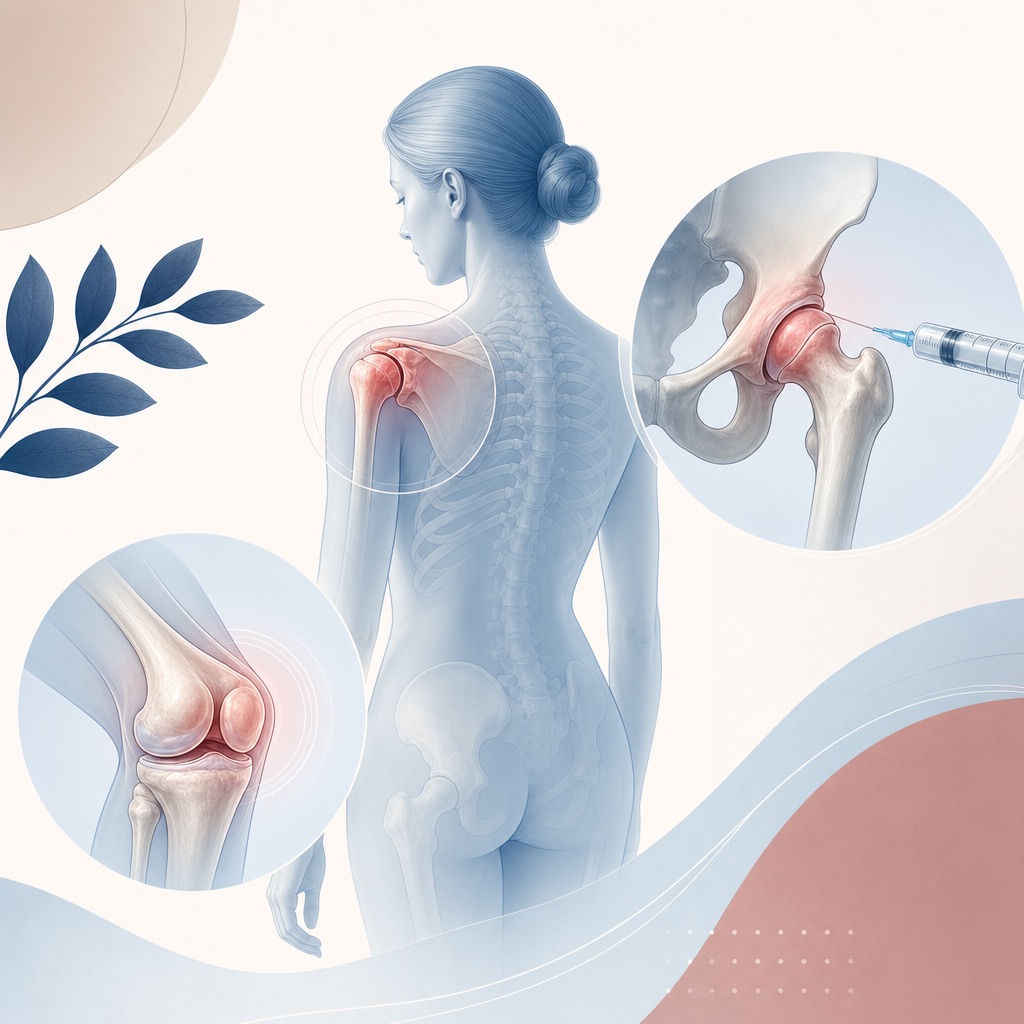
Joint & soft tissue
Platelet-Rich Plasma (PRP) Injections
PRP injections in Houston: what platelet-rich plasma is, where evidence is fair (knee arthritis, some tendons) and weak (spine), and why it is self-pay.
In short
Platelet-rich plasma is made from your own blood: a small sample is spun in a centrifuge to concentrate the platelets, which carry growth factors, and the concentrate is injected into an arthritic joint or a damaged tendon under ultrasound guidance. It is a treatment, not a test. The evidence is fair for knee osteoarthritis and for some tendon problems (tennis elbow, gluteal tendinopathy), weak for the spine, and mixed overall; PRP is not FDA-approved as a treatment for any of these conditions and is not covered by insurance, so it is self-pay. This page is written so you can decide with the same information we have.
Key facts
| Treats | Knee osteoarthritis (fair evidence); lateral epicondylitis (tennis elbow), gluteal and patellar tendinopathy (fair evidence); rotator cuff and Achilles tendinopathy, plantar fasciitis, hip osteoarthritis (mixed or weak); spine (weak) |
|---|---|
| Test or treatment? | Treatment |
| Procedure time | About 45–60 minutes: blood draw, 15–20 minutes of processing, then a 10-minute ultrasound-guided injection |
| Anesthesia | Local anesthetic in the skin; no sedation |
| Downtime | Rest for 2–3 days; expect increased pain for 3–7 days; light activity after that |
| When relief starts | Typically 4–8 weeks; some people notice change at 2–3 weeks, others not until 3 months |
| How long relief lasts | In responders, 6–12 months for knee osteoarthritis; tendon improvements can be longer-lasting. Roughly 1 in 3 to 1 in 2 patients do not respond meaningfully |
| How often it can be repeated | A course is 1–3 injections, 2–6 weeks apart; repeated no more than about once a year |
| Insurance | Not covered by Medicare or commercial insurance for these conditions; self-pay. We give the cost in writing before you decide |
Who it is for
- Severe (bone-on-bone, grade 4) knee osteoarthritis, where PRP has little effect and knee replacement or genicular ablation is the better path
- Spine conditions (disc, facet, epidural): the evidence for PRP in the spine is weak, and we do not recommend it there
- A joint replacement planned within the next few months, or an existing joint replacement
- Active cancer, a blood or platelet disorder, anemia, or a platelet count below normal
- Active infection or fever, or a skin infection over the site
- Patients who cannot pause anti-inflammatory medication or who take a blood thinner that cannot be managed
- Anyone expecting cartilage regrowth or a cure; PRP does not do that, and we will not promise it
What PRP is, and what it is not
Platelets are the blood cells responsible for clotting, and they carry a package of growth factors and signaling proteins that the body uses in tissue repair. PRP is produced by drawing 30–60 mL of your blood, spinning it in a centrifuge for 10–20 minutes to separate and concentrate the platelets (typically 3–5 times the level in whole blood), and injecting the concentrate, usually 3–6 mL, into the joint or around the tendon under ultrasound. Preparations differ in platelet concentration and in whether white blood cells are included (leukocyte-rich vs leukocyte-poor); leukocyte-poor PRP is generally preferred for joints, and the differences between products are one reason study results vary.
The proposed mechanism is that the growth factors reduce inflammation in the joint lining and stimulate repair in tendon tissue. That is plausible and partly supported. What is not supported is the claim that PRP regrows cartilage: the largest placebo-controlled trial in knee osteoarthritis measured cartilage volume on MRI at 12 months and found no difference from saline. PRP may reduce pain for months; it does not reverse arthritis.
Regulatory status. PRP is made with FDA-cleared centrifuge devices, and because it is your own minimally processed blood it is not regulated as a drug. That means no PRP product has been approved by the FDA as safe and effective for arthritis, tendon injury or any pain condition, and any clinic claiming "FDA-approved PRP" is misstating the situation. The FDA has warned consumers about clinics marketing unproven regenerative products, and we take that seriously: we describe PRP as what it is, an injection with fair evidence for some conditions and none for others.
Stem cells. PRP contains no stem cells. We do not offer stem cell injections, exosomes or amniotic products for pain, because the evidence for them is weaker than for PRP and the regulatory concerns are greater.
Where the evidence is fair, and where it is weak
Knee osteoarthritis: fair, with a large negative trial. Multiple randomized trials and meta-analyses have found PRP at least as good as, and often somewhat better than, hyaluronic acid (gel) injections at 6–12 months for pain and function in mild-to-moderate knee arthritis, with benefit fading after a year; hyaluronic acid is another option some clinics offer, we do not perform it, and the evidence for it is mixed (AAOS 2021 recommends against routine use). Against that, the RESTORE trial (JAMA 2021), the largest placebo-controlled study, found no meaningful difference between PRP and saline injections for pain or cartilage at 12 months. The American College of Rheumatology 2019 guideline recommends against PRP for knee and hip arthritis, citing the variability of products and studies; the American Academy of Orthopaedic Surgeons 2021 knee guideline rates the evidence as limited. Our reading: PRP is a reasonable self-pay option for someone with mild-to-moderate knee arthritis who has exhausted covered options and does not want repeated steroid, with roughly half of patients getting months of meaningful relief.
Tendons: fair for some. Randomized trials have found PRP superior to steroid injection for tennis elbow at 6–12 months (steroid works faster but fades) and superior to steroid for gluteal tendinopathy at 12 weeks and 2 years. Patellar tendinopathy and plantar fasciitis have smaller supportive trials. Rotator cuff and Achilles tendinopathy results are mixed, and PRP added to rotator cuff surgery has not clearly improved outcomes.
Hip osteoarthritis: weak. Fewer and smaller studies, with inconsistent results; the ACR recommends against it.
Spine: weak. PRP has been injected into discs, facet joints, SI joints and the epidural space in small studies. None of them meet the standard needed to recommend it, the injections are often marketed aggressively, and we do not offer PRP for spine conditions.
What happens on procedure day
- Before the day: stop anti-inflammatory medications (ibuprofen, naproxen, meloxicam, celecoxib, aspirin for pain) 1–2 weeks beforehand, since they blunt platelet function; acetaminophen is fine. Drink plenty of water the day before. Eat a normal meal; do not fast.
- Blood draw: 30–60 mL of blood is drawn from an arm vein into tubes containing an anticoagulant, the same as a routine lab draw.
- Processing: the tubes are spun in a centrifuge for 10–20 minutes to separate the platelet-rich layer, which is drawn into a syringe. You wait in the room during this step.
- Positioning and guidance: the joint or tendon is positioned for access, the skin cleaned with antiseptic, and ultrasound used to identify the target and a safe needle path.
- Injection: local anesthetic in the skin (we avoid injecting anesthetic directly into the tendon, which can interfere with the platelets), then the PRP is injected into the joint or, for a tendon, into and around the damaged area, sometimes with several passes of the needle. Expect pressure and an ache during the injection.
- After: a bandage, a few minutes of observation, and home. No sedation is used, but bring a driver for knee or hip injections if you prefer, since the joint may be sore.
After the procedure, and realistic expectations
Days 0–3. Expect the joint or tendon to be more painful than before, sometimes considerably, for 3–7 days; this inflammatory phase is part of how PRP is thought to work. Rest, ice, and acetaminophen. Do not take anti-inflammatory medication for 2 weeks after the injection. Use crutches or a brace for a tendon injection if walking is painful.
Weeks 1–2. Return to daily activity and gentle range of motion. No running, jumping or heavy loading of the treated area.
Weeks 2–6. Begin or resume a structured loading program with a physical therapist; for tendons this is essential, since the exercise stimulus is thought to direct the repair. See physical therapy and home exercise.
Weeks 4–8. This is when relief usually becomes apparent. Some patients notice change at 2–3 weeks, others not until 3 months. We ask you to rate pain and function at 6–8 weeks.
What success looks like. A good response is a meaningful drop in pain (at least 30–50%) and better function lasting 6–12 months. Roughly 1 in 3 to 1 in 2 patients do not get that. A second or third injection in the course can be given 2–6 weeks after the first for knee arthritis; we do not repeat a course that produced no benefit.
Call us for fever, a hot or very swollen joint after the first week, spreading redness or drainage at the site.
Cost and coverage
Medicare and commercial insurers consider PRP experimental or investigational for arthritis, tendon injury and pain conditions and do not cover it; the only Medicare coverage is for certain chronic non-healing wounds within a clinical study. That makes PRP a self-pay treatment. The price depends on the site treated, the number of injections in a course and the preparation system, and we provide it in writing before you commit so there is no surprise. The blood draw, processing and injection are all done in our office. Health savings and flexible spending accounts can usually be used. PRP injections are available at our Houston and Webster offices, and in Pearland when that office opens in November 2026.
Alternatives and what comes next
For knee arthritis, covered options come first: exercise and weight management, a steroid injection, and, when injections fade, a genicular nerve block and genicular radiofrequency ablation, which have stronger evidence than PRP and are covered. For outer hip pain, a bursa injection plus a gluteal strengthening program is the first step, with PRP reserved for tendon cases that keep recurring. For tennis elbow, a loading program with a therapist and a brace succeed in most patients within 6–12 months without any injection. If PRP is tried and does not help, it is not repeated; the next step is the covered pathway for that joint. Compare all joint medications on the joint injections hub, and read osteoarthritis and knee pain for the conditions.
Safety and preparation
- Blood thinners: PRP injections are low bleeding-risk procedures, but anticoagulants and antiplatelet drugs can reduce the platelet activity that PRP depends on. Tell us about warfarin, apixaban, rivaroxaban, dabigatran, clopidogrel, ticagrelor and aspirin; we decide with your prescriber whether PRP is sensible and whether a short hold is appropriate. Never stop a blood thinner on your own.
- Anti-inflammatory medications: stop ibuprofen, naproxen, meloxicam, celecoxib, diclofenac and aspirin taken for pain 1–2 weeks before and 2 weeks after the injection, because they blunt platelet function. Acetaminophen is fine. Do not stop low-dose aspirin prescribed for your heart without asking.
- Diabetes: PRP contains no steroid and does not affect blood sugar. Well-controlled diabetes is not a barrier; poorly controlled diabetes raises infection risk and slows healing, so we may ask you to improve control first.
- Infection or fever: we reschedule for fever, an active infection anywhere, or a skin problem over the site.
- Allergies (contrast, steroid, local anesthetic): tell us about reactions to lidocaine or dental numbing. No contrast or steroid is used; the collection tubes contain citrate as an anticoagulant.
- Pregnancy: tell us if you are or could be pregnant; PRP uses ultrasound, not X-ray, but elective injections are usually deferred.
- Sedation and driving: no sedation is used. Most people drive themselves; bring a driver for a knee or hip injection if you prefer, since the joint will be sore.
- Blood conditions: tell us about anemia, low platelets, a bleeding disorder, active cancer or recent chemotherapy, which can make PRP unsuitable.
- Hydration and food: drink plenty of water the day before and the morning of the blood draw, and eat a normal meal; do not fast.
- Recent steroid: a steroid injection into the same joint within the past 4–6 weeks can reduce the response; tell us about any recent injections.
Risks and side effects
- Increased pain, stiffness and swelling at the site for 3–7 days
- Bruising at the injection site and at the blood-draw site
- Light-headedness during the blood draw
- No meaningful benefit, in roughly 1 in 3 to 1 in 2 patients
- A pain flare lasting more than a week
- Bleeding into the joint or tendon, particularly on blood thinners
- Allergic reaction to the local anesthetic or the anticoagulant in the collection tubes (citrate)
- Temporary numbness near the site from the anesthetic
- Infection of the joint or tendon (a risk of any injection; PRP is your own blood, so there is no risk of transmitted disease)
- Tendon rupture, mainly when a weakened tendon is loaded too soon after injection
- Nerve or blood vessel injury from the needle, prevented with ultrasound guidance
- Financial harm from paying for a treatment that does not work, which is why we state the response rate and cost plainly before you decide
Frequently asked questions
Does PRP work for knee arthritis?
For some people. In several trials PRP was at least as good as the lubricant injections it was compared against at 6–12 months for mild-to-moderate knee arthritis, but the largest placebo-controlled trial found no benefit over saline, and rheumatology guidelines recommend against it. In practice roughly half of patients get months of meaningful relief and half do not. It does not regrow cartilage.
Is PRP covered by insurance?
No. Medicare and commercial plans consider PRP investigational for arthritis, tendon injury and pain and do not cover it. It is self-pay, and we give you the price in writing before you decide. HSA and FSA funds can usually be used.
How much does PRP cost?
It depends on the site, the number of injections in the course and the preparation system used. Rather than publish a number that may not apply to you, we provide a written quote at your consultation before anything is scheduled.
How long does PRP take to work, and how long does it last?
Relief typically appears at 4–8 weeks, sometimes as late as 3 months, after an initial 3–7 days of increased pain. In responders, relief for knee arthritis lasts about 6–12 months; tendon improvements can last longer because the tendon itself may heal.
Is PRP FDA-approved?
No. PRP is prepared with FDA-cleared devices from your own blood, so it is not regulated as a drug, but no PRP product is FDA-approved as a treatment for arthritis, tendon injury or pain. Any claim of 'FDA-approved PRP therapy' is inaccurate.
Is PRP the same as stem cell therapy?
No. PRP contains platelets and growth factors, not stem cells. We do not offer stem cell, exosome or amniotic injections for pain; their evidence is weaker than PRP's and the regulatory concerns are greater.
Can I take ibuprofen after a PRP injection?
No, not for 2 weeks before or after. Anti-inflammatory medications blunt platelet function and may reduce the effect. Use acetaminophen, ice and rest for the post-injection soreness instead.
Does PRP work for back pain or disc problems?
The evidence for PRP in the spine (discs, facet joints, SI joints, epidural space) is weak and comes from small studies. We do not offer PRP for spine conditions, and we would be cautious about any clinic that markets it for them.
Sources
- Effect of Intra-articular Platelet-Rich Plasma vs Placebo Injection on Pain and Medial Tibial Cartilage Volume in Patients With Knee Osteoarthritis: The RESTORE Randomized Clinical Trial (Bennell KL, et al., 2021) (opens in new tab) — JAMA
- 2019 American College of Rheumatology/Arthritis Foundation Guideline for the Management of Osteoarthritis of the Hand, Hip, and Knee (opens in new tab) — American College of Rheumatology
- Management of Osteoarthritis of the Knee (Non-Arthroplasty): Evidence-Based Clinical Practice Guideline (2021) (opens in new tab) — American Academy of Orthopaedic Surgeons (AAOS)
- The Effectiveness of Platelet-Rich Plasma Injections in Gluteal Tendinopathy: A Randomized, Double-Blind Controlled Trial (Fitzpatrick J, et al., 2018) (opens in new tab) — American Journal of Sports Medicine
- FDA Warns About Stem Cell Therapies and other unapproved regenerative medicine products (opens in new tab) — U.S. Food and Drug Administration
Next step
Request an appointment
Call (832) 916-2075 or request an appointment online. New patients are welcome; the team confirms insurance and referral requirements before scheduling.