
Joints
Osteoarthritis (Arthritis of the Knee, Hip, Shoulder and Spine)
Osteoarthritis of the knee, hip, shoulder or spine: what works first, how long steroid shots last, and when Houston pain specialists use nerve ablation.
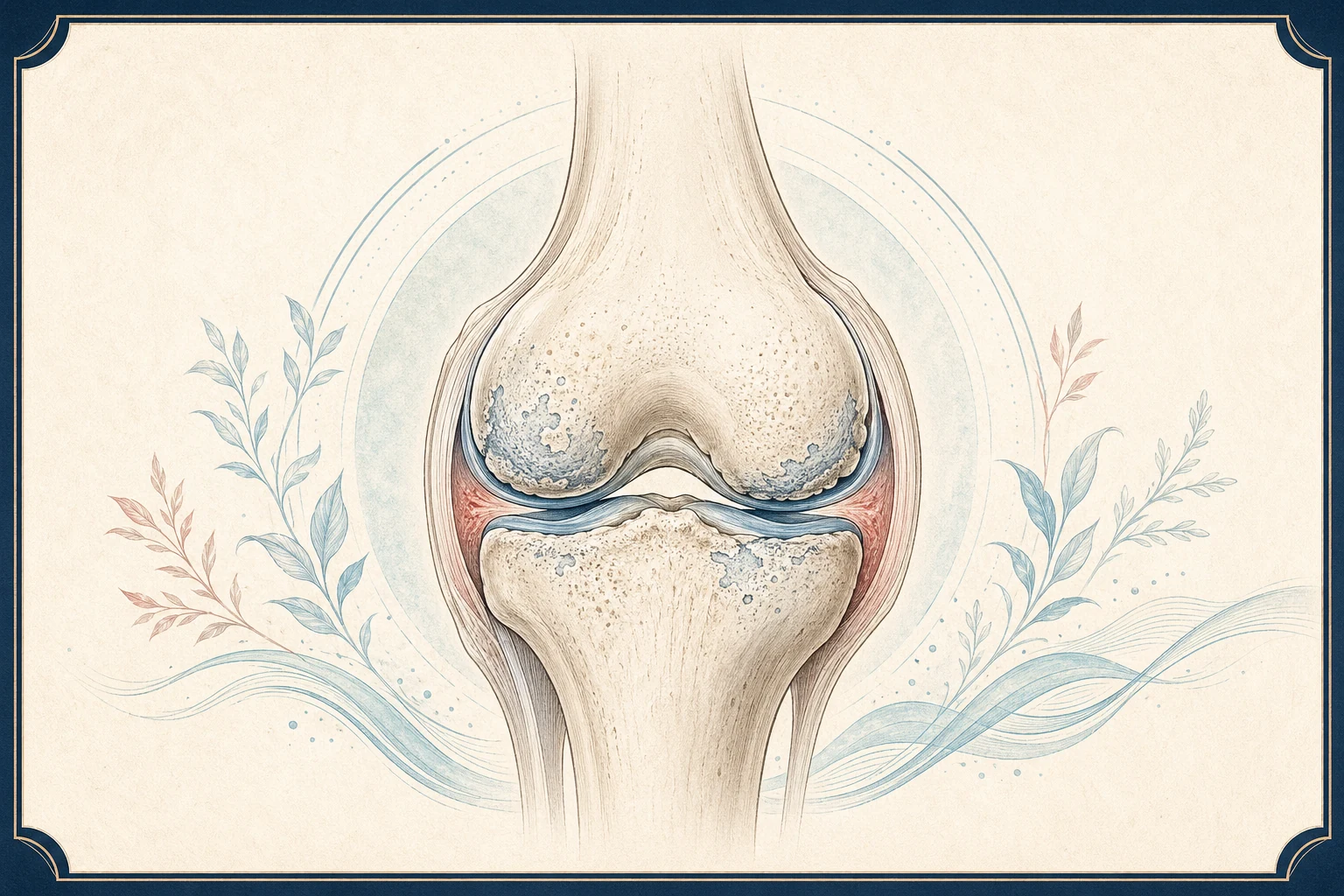
Osteoarthritis is the gradual breakdown of the cartilage that cushions a joint, with bone spurs and low-grade inflammation following. It is the most common form of arthritis, affecting more than 32 million American adults, and it is not the same as rheumatoid or other inflammatory arthritis, which need a rheumatologist. There is no medication that rebuilds cartilage, but the pain can be managed well. Exercise and weight management do the most over years; image-guided steroid injections buy weeks to months; and for knees and spine joints that no longer respond to injections, radiofrequency ablation of the nerves that carry the pain can give 6 to 12 months of relief without surgery.
Key facts
| What it is | Loss of joint cartilage with bone spurs, stiffness and pain, most often in the knees, hips, hands, shoulders and the facet joints of the spine. |
|---|---|
| Most common causes | Age, prior joint injury or surgery, excess body weight (knees and hips), heavy repetitive loading, family history, and joint shape abnormalities such as hip dysplasia. |
| Typical course | Slow progression over years with flares lasting days to weeks. Symptoms do not track X-ray severity closely; many people with severe X-ray changes function well. |
| See a specialist when | Pain limits walking, sleep or work despite 6 to 12 weeks of exercise and medication, injections from your primary care physician give less than a month of relief, or you are not a candidate for joint replacement. |
| Treatments we offer | Image-guided joint injections (knee, hip, shoulder), genicular and suprascapular nerve blocks, radiofrequency ablation of knee and spinal facet nerves, and physical therapy coordination. |
When to get emergency care
Go to an emergency room or call 911 if you have:
- A single joint that becomes hot, red, swollen and too painful to move, especially with fever (septic arthritis or gout; arthritic joints and joints that have been injected or replaced are at higher risk, and the fluid must be tested the same day)
- A joint that will not bear weight or looks deformed after a fall (possible fracture through weakened bone)
- New leg weakness, numbness in the groin, or loss of bladder or bowel control with spinal arthritis (possible severe stenosis or cauda equina syndrome)
- Calf swelling and pain with knee or hip arthritis, particularly after immobility or surgery (possible blood clot)
See a rheumatologist rather than a pain specialist if several joints are swollen at once, morning stiffness lasts more than 30 to 60 minutes, or joint pain comes with rash, fever, eye inflammation or unexplained fatigue. Those features point to rheumatoid, psoriatic or another inflammatory arthritis, which is treated with disease-modifying medication we do not prescribe.
What osteoarthritis is and what it is not
Cartilage is the smooth, slippery layer that lets bone glide on bone. In osteoarthritis it softens, thins and wears through in patches. The bone beneath thickens and forms spurs at the edges, the joint lining becomes intermittently inflamed, and the muscles around the joint weaken from disuse. Pain comes from all of these, which is why a joint with modest X-ray changes can hurt more than one that looks worse.
Osteoarthritis is mechanical and local. Inflammatory arthritis (rheumatoid, psoriatic, gout, lupus) is a body-wide immune process that swells joints symmetrically, causes long morning stiffness, and damages joints fast without medication. The two are often confused; the red flags above are how we tell them apart on the first visit.
Spinal osteoarthritis is the same disease in the small facet joints at the back of each vertebra. It causes neck or low back pain worse with standing and leaning back, and it is one of the most treatable spine problems because those joints have their own tiny sensory nerves that can be blocked and ablated. See facet joint syndrome.
Joint by joint: what we offer
Treatment is joint-specific. The guide below summarizes each; the linked pages go deeper.
- Knee (knee pain page). Typical pain: inner knee ache with stairs, standing from a chair, and walking. First-line: quadriceps strengthening, weight management, topical diclofenac, a cane or unloader brace. We offer: image-guided steroid injection; PRP with the caveats below; genicular nerve block (a test) followed by genicular radiofrequency ablation (a treatment) when injections stop working or after knee replacement; peripheral nerve stimulation for persistent post-replacement pain.
- Hip (hip pain page). Typical pain: groin and front-of-thigh ache, stiffness putting on socks. First-line: walking and cycling, hip strengthening, weight management, a cane in the opposite hand. We offer: fluoroscopy- or ultrasound-guided hip joint steroid injection, which also confirms the joint as the pain source; timely referral for replacement when injections no longer last.
- Shoulder (shoulder pain page). Typical pain: deep grinding ache with loss of rotation. First-line: rotator cuff and scapular strengthening, activity changes. We offer: ultrasound-guided glenohumeral or AC joint steroid injection; suprascapular nerve block, with pulsed radiofrequency to extend it; peripheral nerve stimulation for pain that persists after shoulder replacement.
- Spine facet joints (facet joint syndrome page). Typical pain: neck or low back ache worse standing, leaning back and twisting, without leg numbness. First-line: core strengthening, posture and activity changes, short NSAID courses. We offer: medial branch blocks (a test; relief lasts hours on purpose) and, when two blocks give at least 80 percent relief, radiofrequency ablation of the medial branches for 6 to 12 months or more of relief.
- Hands, feet and other joints. Guideline care is topical NSAIDs, splinting and hand therapy. These are not a focus of the practice; a hand surgeon or rheumatologist is the usual next step.
Symptoms and how it differs from look-alikes
- Osteoarthritis: pain with use and at the end of the day, stiffness for a few minutes after rest (gelling), grinding, occasional swelling, gradual loss of motion. Usually one or a few joints.
- Inflammatory arthritis: many joints, symmetric, swollen and warm; morning stiffness over 30 to 60 minutes that eases with activity; fatigue; sometimes rash or eye symptoms.
- Tendinopathy or bursitis around the joint: one tender spot outside the joint line; the joint itself moves freely. Common on the outer hip and front of the shoulder.
- Referred pain: knee pain from an arthritic hip, shoulder pain from the neck, hip pain from the lumbar spine or SI joint. The joint examines normally and the pain changes with the other structure's position.
- Nerve pain: burning, tingling or numbness in a stocking or glove pattern points to neuropathy, not arthritis.
How we diagnose it
History and exam make the diagnosis in most cases: which joints, how many, the timing of stiffness, swelling, range of motion, muscle strength around the joint and a check of neighboring structures that refer pain.
Weight-bearing X-rays confirm cartilage loss, spurs and alignment. We ask for standing views because lying-down films underestimate joint-space narrowing. MRI is rarely needed for osteoarthritis and often shows meniscus or labral fraying that is not the source of pain.
Blood tests (rheumatoid factor, anti-CCP, ESR, CRP, uric acid) when the pattern suggests inflammatory arthritis or gout, followed by rheumatology referral if positive.
Diagnostic injections and blocks. When it is unclear whether a joint is the pain source, an image-guided local anesthetic injection into the joint (hip, shoulder) or a block of the nerves that supply it (genicular for the knee, medial branch for the facets) answers the question. These are tests; relief lasting only as long as the anesthetic confirms the target and, for the knee and spine, predicts who will benefit from radiofrequency ablation.
Treatment options, in order
The ladder follows the 2019 American College of Rheumatology guideline and the 2021 AAOS knee guideline, with the nerve-based procedures that pain medicine adds at the end.
- Exercise, weight management and physical therapy (strongly recommended, first-line)
Land- or water-based aerobic exercise, strengthening the muscles that cross the joint, tai chi and balance work, and weight loss for knee and hip arthritis if you carry extra weight: losing 10 percent of body weight cuts knee pain by roughly half in trials. A supervised program of 6 to 12 weeks builds the habit; the benefit continues as long as you do. Assistive devices (a cane, a tibiofemoral unloader brace) are also strongly recommended. See how we coordinate physical therapy. Learn more →
- Medication
Topical NSAIDs first for knees and hands; oral NSAIDs at the lowest effective dose when kidneys, heart and stomach allow; acetaminophen has a small effect; duloxetine for pain in several joints. Glucosamine, chondroitin and most supplements have no reliable benefit. Opioids are recommended against for chronic osteoarthritis pain (tramadol only when other options are exhausted). Our medication management page explains how we prescribe. Learn more →
- Image-guided corticosteroid injection
Recommended by the ACR for knee and hip (under image guidance for the hip) and used for the shoulder. Relief typically starts within 1 to 3 days (2 to 7 for the hip) and lasts 4 to 12 weeks; it varies with how inflamed the joint is. We limit steroid injections to about 3 or 4 per year in any one joint and space them at least 3 months apart. A 2-year trial of knee injections every 3 months found more cartilage loss and no pain advantage over saline, which is why we do not run steroid injections on a schedule. PRP and stem cell injections are strongly recommended against by the ACR for lack of standardized evidence, and PRP is not covered by insurance. Learn more →
- Nerve block (test) and radiofrequency ablation (treatment)
For knees and spinal facet joints that no longer respond to injections, or knees still painful after replacement. A diagnostic block of the genicular nerves or medial branches must relieve most of the pain for the duration of the anesthetic. Radiofrequency then heat-lesions those nerves; relief builds over 1 to 3 weeks and typically lasts 6 to 12 months, with 60 to 75 percent of patients reporting at least half their pain gone at 6 months in trials. The nerves regrow, so it can be repeated. It does not change the arthritis or rule out later surgery. Learn more →
- Peripheral nerve stimulation
For persistent pain after knee or shoulder replacement, or when surgery is not an option, a lead placed beside the relevant nerve delivers stimulation that blocks pain signals. A 60-day temporary system tests the response first. Learn more →
- Joint replacement referral
Bone-on-bone arthritis that limits daily life despite the steps above, in a patient healthy enough for surgery, is best treated with replacement, which is among the most reliable operations in medicine. We refer promptly and avoid steroid injections in the 3 months before a planned replacement.
What you can do now
- Move every day. Thirty minutes of walking, cycling or pool exercise, split into shorter bouts if needed, reduces arthritis pain more reliably than any pill.
- Strengthen the muscles that cross the painful joint: sit-to-stands and straight-leg raises for the knee, bridges and side-lying leg raises for the hip, band rows and external rotation for the shoulder.
- If you carry extra weight, every pound lost removes about 4 pounds of load from each knee with every step.
- Use topical diclofenac gel for knee and hand flares before oral pills.
- Use a cane in the hand opposite the painful hip or knee for longer walks.
- Bring standing X-rays, injection dates and any orthopedic or rheumatology notes.
Gulf Coast Pain & Spine treats osteoarthritis pain at our Houston and Webster offices, and in Pearland once that office opens in November 2026.
Frequently asked questions
What is the difference between osteoarthritis and arthritis?
Arthritis is the general word for joint inflammation or damage; osteoarthritis is the most common type, caused by cartilage wear. Rheumatoid, psoriatic and gouty arthritis are inflammatory types with different causes and treatments. When people say arthritis, they usually mean osteoarthritis, and that is what this page covers.
Can osteoarthritis be reversed or cured?
No treatment regrows cartilage, including PRP or stem cell injections, and we do not claim otherwise. What can be changed is pain, strength and function, and those matter more than the X-ray. Exercise and weight management slow progression; injections and nerve ablation control pain.
How many steroid injections can I have in a joint?
Typically 3 or 4 per year, at least 3 months apart. More frequent injections do not work better and, in the knee, were linked to faster cartilage loss in a 2-year trial. If an injection lasts less than a month, we change strategy rather than repeat it.
What can I do if injections have stopped working and I am not ready for surgery?
For the knee, a genicular nerve block followed by radiofrequency ablation gives 6 to 12 months of relief in most responders and can be repeated. For spinal facet arthritis, medial branch radiofrequency ablation does the same. For the hip, options are more limited and replacement is usually the right next step.
Are gel injections or PRP worth trying?
Hyaluronic acid (gel) injections are another option some clinics offer; we do not perform them, and the evidence for them is mixed (AAOS 2021 recommends against routine use). PRP trials are mixed and the ACR recommends against it for arthritis; it is not covered by insurance. We will give you our honest recommendation for your joint rather than sell you an injection.
Does weather affect arthritis pain?
Many patients notice more pain with falling barometric pressure and cold, damp weather, and small studies support a modest effect. It does not damage the joint; staying active and warm through those days is the practical answer.
Does radiofrequency ablation prevent me from having a knee replacement later?
No. It treats the small sensory nerves outside the joint and does not affect the bone or the surgery. Many patients use it to delay replacement, and some who have had a replacement use it for persistent pain afterward.
Sources
- 2019 American College of Rheumatology/Arthritis Foundation Guideline for the Management of Osteoarthritis of the Hand, Hip, and Knee (Kolasinski SL et al., 2020) (opens in new tab) — American College of Rheumatology
- Management of Osteoarthritis of the Knee (Non-Arthroplasty), Evidence-Based Clinical Practice Guideline, 3rd edition (2021) (opens in new tab) — American Academy of Orthopaedic Surgeons
- Osteoarthritis: overview, symptoms, diagnosis and treatment (opens in new tab) — National Institute of Arthritis and Musculoskeletal and Skin Diseases (NIAMS)
- Effect of intra-articular triamcinolone vs saline on knee cartilage volume and pain in patients with knee osteoarthritis (McAlindon TE et al., 2017) (opens in new tab) — JAMA / PubMed
- Intra-articular corticosteroid for knee osteoarthritis (Cochrane review, Jüni P et al., 2015) (opens in new tab) — Cochrane Database of Systematic Reviews
Request an appointment
Call (832) 916-2075 or request an appointment online. New patients are welcome; the team confirms insurance and referral requirements before scheduling.