
Joints
Shoulder Pain (Rotator Cuff, Frozen Shoulder and Arthritis)
Rotator cuff tear, frozen shoulder or arthritis? Houston pain specialists explain which shoulder pain needs a surgeon now and which responds to injections.
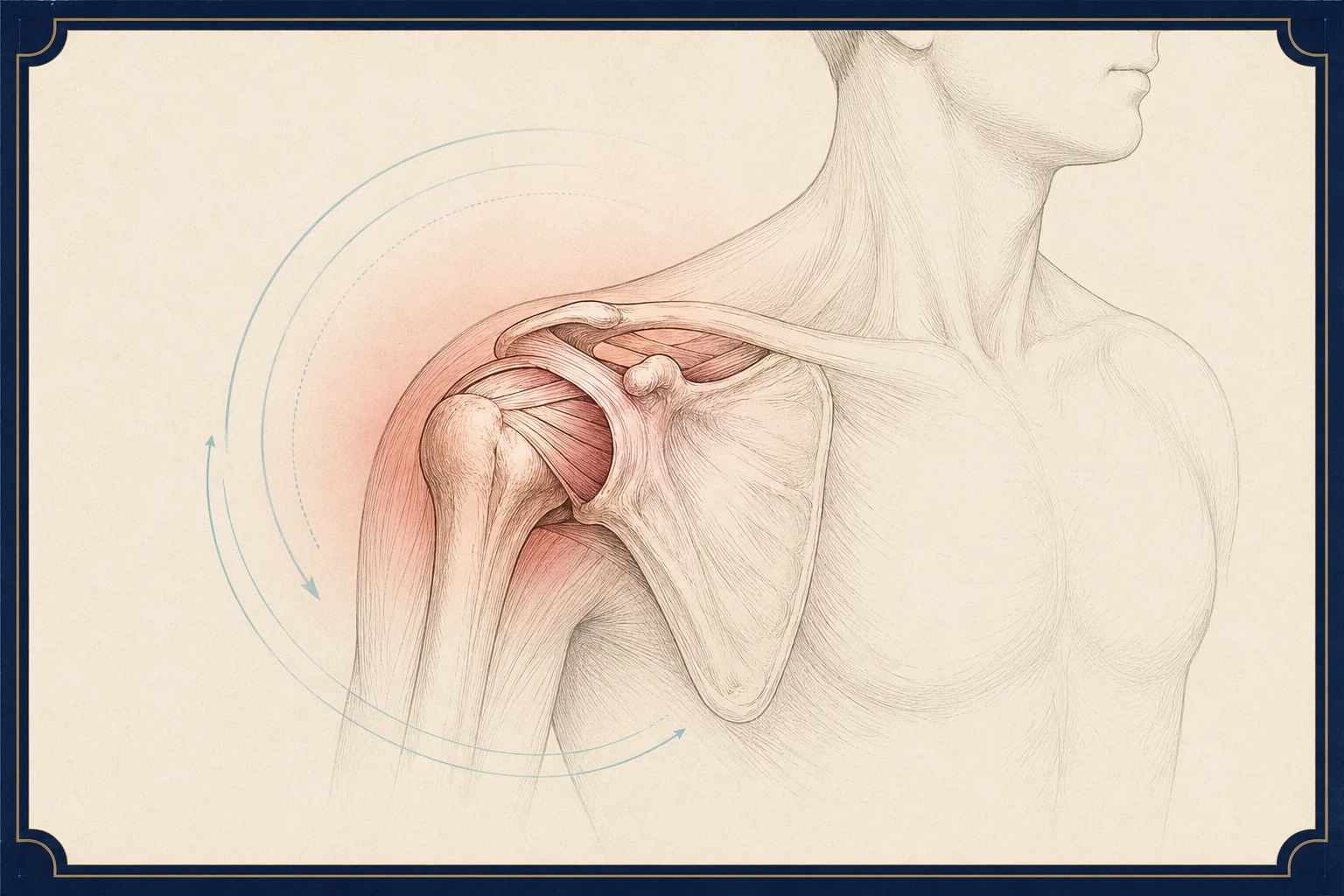
Shoulder pain has four usual sources: the rotator cuff tendons, a stiff and inflamed joint capsule (frozen shoulder), arthritis of the ball-and-socket joint, and pain referred from the neck. Most of it improves with physical therapy and one or two well-placed injections. A smaller group needs a surgeon quickly, especially a younger person with a sudden full-thickness rotator cuff tear after a fall, and a persistent group benefits from blocking or stimulating the suprascapular nerve, which carries most of the shoulder's pain signals. Sorting out which group you are in is the first visit's job.
Key facts
| What it is | Pain in the ball-and-socket joint, the rotator cuff tendons and bursa over it, or the joint capsule, or pain referred to the shoulder from the cervical spine. |
|---|---|
| Most common causes | Rotator cuff tendinopathy and tears, subacromial bursitis, frozen shoulder (adhesive capsulitis), glenohumeral osteoarthritis, and cervical radiculopathy. |
| Typical course | Tendinopathy and bursitis improve over 6 to 12 weeks with therapy. Frozen shoulder runs 1 to 3 years through freezing, frozen and thawing phases. Degenerative cuff tears often stabilize; traumatic tears do not heal on their own. |
| See a specialist when | Pain wakes you at night or limits reaching for more than 6 weeks despite therapy, injections from your primary care physician have stopped working, or you have been told surgery is not an option. |
| Treatments we offer | Image-guided shoulder and bursa joint injections, suprascapular nerve block, peripheral nerve stimulation, cervical spine evaluation, and physical therapy coordination. |
When to get emergency care
Go to an emergency room or call 911 if you have:
- Left (or either) shoulder or arm pain that comes with chest pressure, shortness of breath, sweating, nausea or lightheadedness, or that starts with exertion; heart attack pain is often felt in the shoulder and arm rather than the chest
- A visible deformity, a bump or a step at the shoulder after a fall, or an arm you cannot lift at all after an injury (possible dislocation or fracture)
- A hot, red, swollen shoulder with fever or chills (possible joint infection)
- Sudden numbness, weakness or coldness of the whole arm, or a pale or blue hand (possible vascular or nerve injury)
See an orthopedic surgeon within 1 to 2 weeks, not a pain specialist, if you are under about 60 and lost the ability to lift your arm after a specific fall or jerk. An acute, traumatic full-thickness rotator cuff tear retracts and the muscle degenerates over months, and repair works best within the first several weeks. We will send you the same day if that is your story.
The four sources of shoulder pain
The shoulder trades stability for range of motion. A shallow socket, a loose capsule and four small rotator cuff muscles hold the ball in place, and each of those parts can fail in a recognizable way.
- Rotator cuff tendinopathy and tears. The most common cause after 40. Tendons fray and thin with use; the supraspinatus, which lifts the arm out to the side, wears first. Partial and full-thickness tears become more common with age and about half of people over 60 have a tear on MRI, many with no symptoms. Pain is on the outer upper arm, worse reaching overhead, behind the back, and lying on that side at night.
- Frozen shoulder (adhesive capsulitis). The capsule around the joint becomes inflamed, thickens and contracts. It is most common between 40 and 60, in women, and in people with diabetes or thyroid disease, where the risk is several times higher. It moves through three phases: painful freezing (2 to 9 months), stiff frozen (4 to 12 months) and gradual thawing (5 to 24 months). The whole course is 1 to 3 years, and treatment aims to shorten it and control pain along the way.
- Osteoarthritis. Wear of the cartilage of the ball-and-socket (glenohumeral) joint or the small acromioclavicular joint on top of the shoulder. Deep ache, grinding and progressive stiffness. See the osteoarthritis page.
- Referred pain from the neck. An irritated C5 or C6 nerve root causes shoulder and upper arm pain that can pass for a cuff problem. The clue is pain that changes with neck position, tingling into the hand, or a normal shoulder exam. See cervical radiculopathy.
Rotator cuff tears: which ones need surgery and when
Not every tear is the same problem. A degenerative tear develops slowly from wear, is common after 60, and usually does well without surgery: physical therapy restores function in most people, and studies following degenerative tears for years show many never need repair. An acute traumatic tear happens at a moment you can name, a fall on an outstretched arm, catching a heavy object, a hard yank, and is followed by sudden weakness. In a younger or active patient, that is time-sensitive. The torn tendon pulls back from the bone and the muscle turns to fat over months, and the American Academy of Orthopaedic Surgeons recommends early repair for these. We do not manage that situation; we refer to orthopedics promptly.
Signs of a full-thickness tear on exam include weakness lifting the arm against resistance, inability to hold the arm out to the side once it is placed there (the drop-arm sign), and marked weakness turning the arm outward. MRI or ultrasound confirms the tear and its size.
Our role in rotator cuff disease is the large middle group: partial tears and tendinopathy, degenerative tears in patients who are not surgical candidates or prefer not to have surgery, and persistent pain after a repair. For them, physical therapy, a subacromial steroid injection under ultrasound guidance, and, when pain limits therapy, a suprascapular nerve block are the tools.
The frozen shoulder pathway
Frozen shoulder is often missed early because X-rays are normal and the pain resembles a cuff problem. The distinguishing sign is loss of passive motion: when we move your arm for you, it stops short, especially turning outward. Once recognized, the plan follows the phase you are in.
- Freezing phase: an intra-articular steroid injection under image guidance is the single most effective treatment for pain in this phase and shortens the painful period; oral steroids are an alternative. Gentle range-of-motion work begins right away.
- Frozen phase: structured physical therapy and a home stretching program are the main treatment; steroid injection helps less once inflammation has settled. A suprascapular nerve block can make stretching tolerable when pain limits therapy.
- Thawing phase: therapy continues; motion returns gradually.
- Persistent cases (beyond 6 to 12 months of good therapy): hydrodilatation (injecting a large volume of fluid to stretch the capsule) or referral to orthopedics for manipulation under anesthesia or arthroscopic capsular release.
Patients with diabetes should expect a slower, more stubborn course and benefit from starting treatment early.
Symptoms and how it differs from look-alikes
- Rotator cuff: outer upper-arm pain reaching overhead or behind the back, night pain lying on that side, weakness if torn; passive motion is preserved.
- Frozen shoulder: diffuse deep pain and stiffness; both active and passive motion are lost, especially external rotation; X-rays are normal.
- Arthritis: deep grinding ache with gradual stiffness; X-rays show joint-space loss and spurs.
- Neck referral: pain from the neck across the shoulder blade and upper arm that changes with neck movement, sometimes with tingling into the thumb or fingers.
- Cardiac referral: shoulder or arm pain brought on by exertion, with chest pressure, breathlessness or sweating, and no change with shoulder movement.
How we diagnose it
Examination separates these in most cases: active and passive range of motion, strength testing of each cuff muscle, impingement tests, tenderness over the AC joint and biceps tendon, and a screen of the cervical spine and the nerves of the arm.
X-rays show arthritis, calcific tendinitis and bone spurs. Ultrasound in the office can show cuff tears, bursitis and fluid, and guides injections precisely. MRI is ordered when a full-thickness tear is suspected, before any surgical referral, or when the exam does not fit.
Diagnostic injection. When it is unclear whether pain is coming from the shoulder or the neck, a small ultrasound-guided injection of local anesthetic into the subacromial space or joint answers the question: if the pain disappears while the anesthetic works, the shoulder is the source. That short-lived relief is the test; a steroid given at the same time is the treatment.
Treatment options, in order
For tendinopathy, degenerative tears, bursitis, frozen shoulder and arthritis, the order below applies. Acute traumatic tears skip straight to orthopedics.
- Physical therapy and activity changes
The foundation for every diagnosis on this page. Rotator cuff and scapular strengthening, posture work and stretching over 6 to 12 weeks. Avoid the painful arc of overhead reaching during recovery rather than resting the arm completely, which stiffens it. See how we coordinate physical therapy. Learn more →
- Medication
Short courses of oral NSAIDs when safe, topical anti-inflammatories over the AC joint or biceps, acetaminophen, and for frozen shoulder a short oral steroid taper in the freezing phase. Sleeping propped up with a pillow under the arm often does more for night pain than any pill.
- Image-guided steroid injection
Into the subacromial bursa for cuff tendinopathy and bursitis, into the joint for frozen shoulder and arthritis, or into the AC joint. Ultrasound guidance places it correctly, which matters: blind shoulder injections miss the target a large share of the time. Relief typically starts within 1 to 3 days and lasts 4 to 12 weeks; we limit steroid injections to about 3 per year in one shoulder because repeated steroid weakens tendon. Learn more →
- Suprascapular nerve block
The suprascapular nerve carries roughly 70 percent of the sensation from the shoulder joint and cuff. Blocking it with local anesthetic and steroid under ultrasound relieves pain for weeks to months in chronic cuff disease, frozen shoulder and arthritis, and in randomized trials it outperformed placebo and matched intra-articular injection. It is a treatment, and it is particularly useful when pain is blocking therapy or when steroid into the joint is not advisable. Pulsed radiofrequency of the same nerve can extend relief. Learn more →
- PRP for tendinopathy, with caveats
Platelet-rich plasma is offered in some clinics for partial cuff tears and tendinopathy. Trials are mixed, the AAOS makes no recommendation for it, and insurance does not cover it. We discuss it honestly for specific patients rather than promote it. Learn more →
- Peripheral nerve stimulation
For persistent shoulder pain after a repair or replacement, for post-stroke shoulder pain, or when surgery is not an option, a thin lead placed beside the suprascapular or axillary nerve delivers stimulation that blocks pain signals. A 60-day temporary system tests the response first. Learn more →
- Orthopedic referral
Acute traumatic full-thickness tears, tears with progressive weakness, frozen shoulder that fails 6 to 12 months of therapy, and advanced arthritis in a patient who wants a replacement. We arrange the referral rather than continue injections past their usefulness.
What you can do now
- Sleep on the other side or on your back with a pillow supporting the painful arm.
- Pendulum swings and wall walks twice a day keep the shoulder moving without loading the cuff.
- Keep elbows close to your body when lifting; avoid the overhead reach that reproduces the pain, but do not stop using the arm.
- If you have diabetes, keep blood sugar controlled; it directly affects frozen shoulder and healing.
- Bring your X-rays, MRI or ultrasound report, injection dates and any orthopedic notes.
Gulf Coast Pain & Spine treats shoulder pain at our Houston and Webster offices, and in Pearland when that office opens in November 2026.
Frequently asked questions
Do I need surgery for a rotator cuff tear?
It depends on how the tear happened and who you are. A sudden tear after a fall in a younger or active person should be repaired within weeks, before the tendon retracts. A degenerative tear in someone over 60 usually does well with physical therapy and an injection, and many never need surgery. Weakness that is getting worse tips the balance toward a surgeon at any age.
How do I know if I have frozen shoulder?
The defining feature is that the shoulder will not move even when someone else moves it for you, especially rotating outward, and X-rays are normal. It usually starts with weeks of increasing pain without an injury, often between 40 and 60, and more often with diabetes. Early steroid injection into the joint shortens the painful phase.
Can my shoulder pain be coming from my neck?
Yes, often. A pinched C5 or C6 nerve root refers pain across the shoulder blade and upper arm. Pain that changes with neck position, tingling into the hand, or a shoulder that examines normally points to the neck. A diagnostic injection into the shoulder settles it when the exam is unclear.
What is a suprascapular nerve block?
An ultrasound-guided injection of local anesthetic and steroid around the nerve that carries most of the shoulder joint's pain signals, given at the top of the shoulder blade. It gives weeks to months of relief in chronic cuff disease, frozen shoulder and arthritis, and it can be extended with pulsed radiofrequency. It is a treatment, not just a test.
How many steroid injections can I have in my shoulder?
Typically no more than about 3 in a year and no closer together than 6 to 8 weeks. Steroid weakens tendon with repeated exposure, so if the first one or two do not give lasting relief, we change strategy rather than repeat them.
Is shoulder pain ever a sign of a heart problem?
It can be. Heart attack pain is often felt in the left shoulder, arm or jaw rather than the chest, and it comes with exertion, breathlessness, sweating or nausea and does not change when you move the shoulder. If that describes your pain, call 911 rather than booking with us.
Does PRP heal rotator cuff tears?
There is no good evidence that PRP heals a full-thickness tear, and trials in tendinopathy and partial tears are mixed. The AAOS makes no recommendation for it and insurance does not cover it. We discuss it case by case rather than recommend it routinely.
Sources
- Rotator Cuff Tears (opens in new tab) — American Academy of Orthopaedic Surgeons, OrthoInfo
- Management of Rotator Cuff Injuries, Evidence-Based Clinical Practice Guideline (2019) (opens in new tab) — American Academy of Orthopaedic Surgeons
- Frozen Shoulder (Adhesive Capsulitis) (opens in new tab) — American Academy of Orthopaedic Surgeons, OrthoInfo
- Comparison of the effectiveness of suprascapular nerve block with physical therapy, placebo, and intra-articular injection in management of chronic shoulder pain: a meta-analysis (Chang KV et al., 2016) (opens in new tab) — Archives of Physical Medicine and Rehabilitation
- Warning Signs of a Heart Attack (opens in new tab) — American Heart Association
Request an appointment
Call (832) 916-2075 or request an appointment online. New patients are welcome; the team confirms insurance and referral requirements before scheduling.