
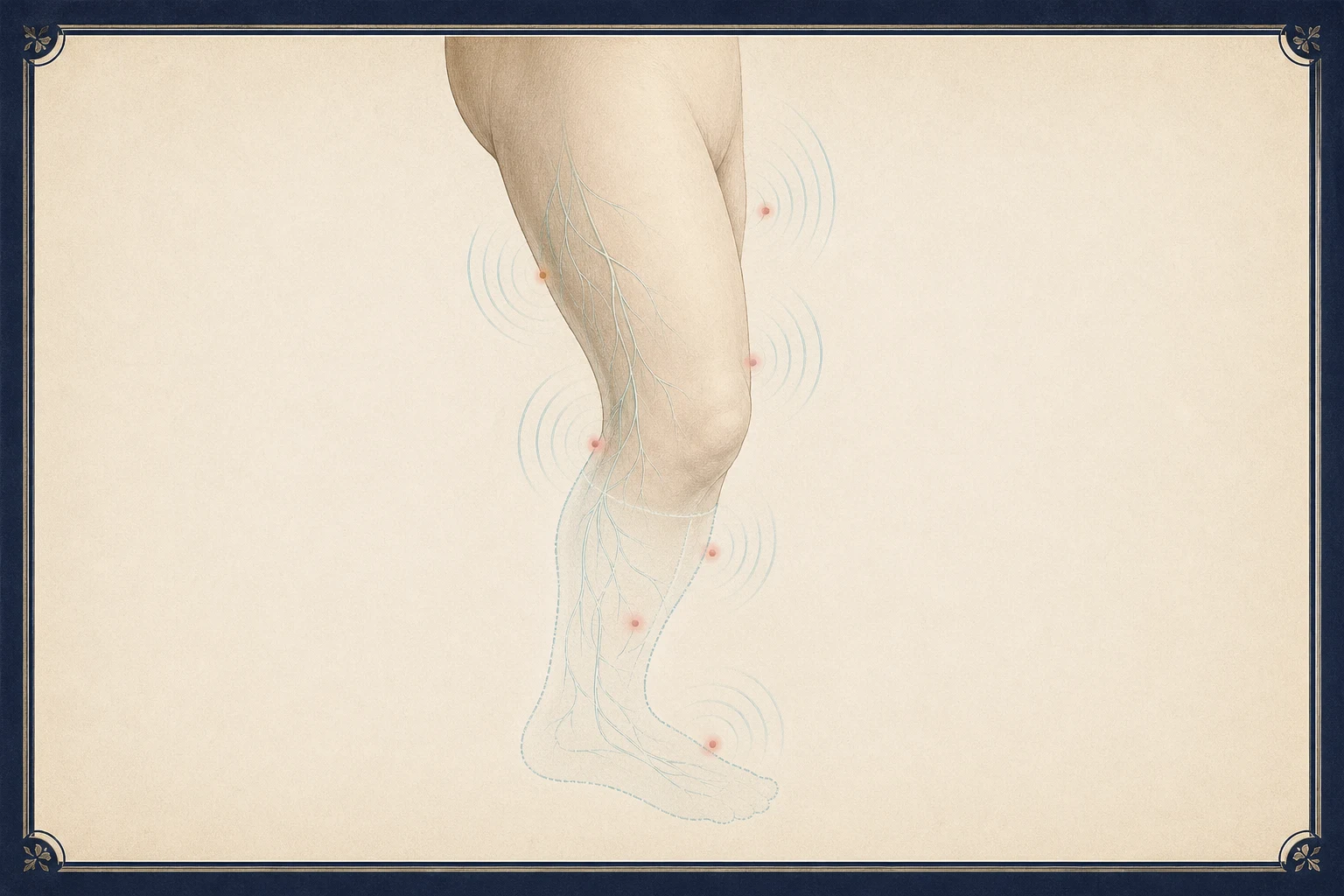
Nerve pain after amputation
Phantom Limb Pain and Residual Limb Pain
Pain in a limb that is gone is real nerve pain. Houston pain specialists explain mirror therapy, neuroma treatment, TMR referral and nerve stimulation.
Phantom limb pain is pain felt in the part of a limb that has been amputated. It affects up to 80 percent of people after amputation, usually starting within the first week, and it is generated by the nervous system, not by imagination. It is different from residual limb (stump) pain, which comes from the remaining limb itself, often from a neuroma, the socket, or the bone. The two are treated differently and frequently coexist. Mirror therapy and nerve-pain medication are the first steps; a painful neuroma can be injected, ablated or surgically rerouted; and for pain that resists all of that, peripheral nerve, spinal cord or dorsal root ganglion stimulation are options with a trial first.
Key facts
| What it is | Phantom limb pain: burning, cramping, shooting or crushing pain perceived in the missing limb. Residual limb pain: pain in the remaining limb from nerve, bone, skin or socket problems. Phantom sensation (feeling the limb is there without pain) is normal and needs no treatment. |
|---|---|
| Most common causes | Reorganization of the nerve pathways and brain map after amputation; a neuroma at the cut nerve end; poor socket fit; bone spurs or heterotopic bone; pre-amputation pain that persists. |
| Typical course | Phantom pain is most intense in the first 6 months and improves in many people over 1 to 2 years, but persists long-term in roughly half. Residual limb pain that appears months later usually has a fixable local cause. |
| See a specialist when | Pain interferes with sleep or prosthesis use, medication is not controlling it after 4 to 6 weeks, a spot on the stump is exquisitely tender, or you are considering surgery for a neuroma. |
| Treatments we offer | Mirror therapy coordination, nerve-pain medication, ultrasound-guided neuroma injection, peripheral nerve stimulation, spinal cord stimulation, DRG stimulation, and referral for TMR or RPNI surgery. |
When to get emergency care
Call your surgeon or go to an emergency room the same day if you have:
- Redness, warmth, swelling, drainage or an opening in the skin of the residual limb, or fever (possible wound infection or deep infection, which can threaten the limb and the bone)
- A residual limb that becomes cool, pale, mottled or bluish, or new rest pain in a limb amputated for vascular disease (possible loss of blood flow; call your vascular surgeon)
- Sudden swelling and pain in the remaining leg or the residual limb (possible blood clot)
- In people with diabetes or vascular disease, any new sore, blister or ulcer on the other foot; the remaining limb is at high risk and must be checked without delay
- Chest pain, shortness of breath or new confusion in the weeks after amputation surgery
New pain that begins months or years after amputation, especially with a change in prosthesis wear, is usually a socket-fit, skin, bone or neuroma problem rather than phantom pain, and is worth an early prosthetist and physician review.
Phantom pain versus residual limb pain
After amputation, three different things can be felt, and separating them is the first step of every visit.
- Phantom sensation is the feeling that the limb is still present: its position, length, itching, tingling. Nearly everyone has it, it is not painful, and it needs no treatment, though telescoping (the phantom hand or foot feeling closer to the stump over time) is common.
- Phantom limb pain is pain located in the missing part, most often the foot or hand. It is described as burning, cramping, squeezing, shooting or like the limb is twisted into an impossible position. It comes from the nervous system: the cut nerves fire abnormally, the spinal cord amplifies those signals, and the brain's map of the body reorganizes so that neighboring areas take over the missing limb's territory. The degree of that reorganization tracks with the intensity of the pain, which is why treatments that retrain the brain, such as mirror therapy, work at all.
- Residual limb pain is pain in the stump itself. Common causes are a neuroma (a tangle of regrowing nerve fibers at the cut end, tender to a tap and producing electric pain into the phantom), a socket that no longer fits because the limb has changed volume, skin breakdown, a bone spur or heterotopic bone, and, in vascular amputees, poor blood flow.
About two-thirds of people with phantom pain also have residual limb pain, and a painful neuroma often drives both. Treating the neuroma frequently quiets the phantom as well.
What makes phantom pain worse
- Pain before the amputation. Long-standing limb pain from vascular disease, infection or injury is the strongest predictor; the nervous system has already learned the pain.
- A neuroma or poorly fitting socket feeding abnormal signals into an already sensitized system.
- Cold, fatigue, stress, poor sleep, and prolonged disuse of the residual limb.
- Abrupt medication changes, including stopping opioids or nerve-pain medication suddenly.
- Weather changes and pressure changes, reported by many patients.
Symptoms and what they point to
- Burning, cramping or shooting pain in the missing foot or hand, often in short bursts several times a day, sometimes constant: phantom limb pain.
- A single tender spot on the stump that sends an electric shock into the phantom when tapped, worse with the prosthesis on: neuroma.
- Pain at the end of the bone or over a bony point, worse with weight-bearing in the socket, sometimes with a visible bump: bone spur or heterotopic bone.
- Aching that appears after weight change or a new prosthesis, with redness or skin breakdown: socket fit.
- Cramping in the calf or thigh with walking, relieved by rest, in a vascular amputee: blood flow, not phantom pain.
- Pain that changes with back position or radiates from the buttock: the lumbar spine, common in amputees because of altered gait. See sciatica and lower back pain.
How we diagnose it
History does most of the work: what the pain feels like, where exactly it is felt, how it relates to the prosthesis, what the limb pain was like before amputation, and what has been tried. We use validated scales to track intensity and interference with sleep and walking.
Examination of the residual limb: skin, scar, pressure areas, volume, tenderness over the bone end, and a careful search for neuromas with a light tap along the course of each major nerve (Tinel's sign). We also examine the spine, hips and remaining limb, because compensation injuries are common.
Imaging when the exam points to it: X-rays for bone spurs and heterotopic bone, ultrasound to see a neuroma and guide injection, MRI for suspected deep infection or a bone problem, and vascular studies when blood flow is in question.
Diagnostic nerve block. This is a test. A small ultrasound-guided injection of local anesthetic at a suspected neuroma tells us whether that nerve is driving the pain: if both the stump pain and the phantom pain fade while the anesthetic works, it is, and that predicts who benefits from neuroma-directed treatment, from stimulation, or from surgical rerouting of the nerve.
Prosthetist coordination. We work with your prosthetist directly. A socket adjustment fixes more late-onset residual limb pain than any injection, and a prosthetist's read on fit and alignment is part of the evaluation, not an afterthought.
Treatment options, in order
Treatment starts with the simplest measures that retrain the nervous system and fix local problems, and moves to procedures only for pain that resists them.
- Mirror therapy and graded motor imagery (first-line)
You place a mirror between your limbs so that the reflection of the intact limb appears where the missing one was, then move both limbs together for 15 to 20 minutes daily. The brain sees the phantom move and unclench. In the landmark randomized trial, all patients using a real mirror improved after 4 weeks compared with a minority using a covered mirror or imagery alone, and most patients notice change within 2 to 4 weeks. It costs nothing, has no side effects, and we teach it at the first visit or through physical or occupational therapy. Desensitization of the stump (rubbing with graded textures) and early, consistent prosthesis use also reduce phantom pain. See how we coordinate therapy. Learn more →
- Nerve-pain medication
Gabapentin or pregabalin, tricyclic antidepressants such as amitriptyline or nortriptyline, and duloxetine have the most support for phantom pain. Short courses of tramadol or, in the immediate post-operative period, other opioids can be used, but long-term opioids are not the plan and are tapered as other treatments take effect. Our medication management page explains how we prescribe and monitor. Learn more →
- Neuroma treatment and socket correction
A painful neuroma confirmed by diagnostic block is treated with an ultrasound-guided steroid and local anesthetic injection, which relieves pain for weeks to months, or with radiofrequency or cryoablation of the nerve for longer relief. At the same time the prosthetist adjusts or replaces the socket to unload the tender spot. Fixing these local drivers often reduces the phantom pain as well. Learn more →
- Surgical referral: targeted muscle reinnervation (TMR) or regenerative peripheral nerve interface (RPNI)
Instead of cutting a neuroma out, which lets it grow back, these operations give the nerve end a new target: TMR sews it to a nearby motor nerve so it reinnervates a small muscle, and RPNI wraps it in a small free muscle graft. In a randomized trial, TMR reduced both phantom and residual limb pain more than standard neuroma excision, and both techniques are now performed at the time of amputation in many centers. We refer patients with a confirmed painful neuroma who want a durable solution to a peripheral nerve or plastic surgeon who performs them.
- Neuromodulation, trial first (refractory pain only)
For pain that persists despite the steps above. Peripheral nerve stimulation: a thin lead placed beside the sciatic, tibial or femoral nerve (or the median or ulnar nerve for the arm) under ultrasound, with a 60-day temporary system to test the response; studies in amputees report meaningful reductions in both phantom and residual limb pain in a majority of responders. Spinal cord stimulation: for widespread limb pain, with a 5- to 7-day trial and a 50 percent relief threshold before implant. Dorsal root ganglion stimulation: targets the nerve root supplying the missing limb and suits focal phantom pain, particularly of the foot; its FDA-labeled indication is complex regional pain syndrome of the lower limb, so coverage for phantom pain varies by insurer. These are reserved for refractory cases because they are implants with their own risks; the trial tells us whether the benefit justifies them. Learn more →
What you can do now
- Start mirror therapy today: a cheap full-length mirror, 15 minutes a day, moving both limbs slowly while watching the reflection.
- Wear your prosthesis consistently once fitted; regular use reduces phantom pain over time, and stopping often makes it worse.
- Desensitize the stump with a towel, then rougher fabrics, a few minutes several times a day.
- Keep the residual limb warm; cold is a common trigger.
- Check the skin of the stump and the remaining foot every day, especially if you have diabetes or vascular disease.
- Do not stop nerve-pain medication or opioids abruptly; ask us for a taper plan.
- Bring your surgical report, prosthetist's notes and a list of medications tried and their doses.
Gulf Coast Pain & Spine treats phantom limb and residual limb pain at our Houston and Webster offices, and in Pearland once that office opens in November 2026.
Frequently asked questions
Is phantom limb pain real or psychological?
It is real, measurable nerve pain. The cut nerves fire abnormally, the spinal cord amplifies the signal, and brain imaging shows the map of the body reorganizing in proportion to the pain. Stress and poor sleep make it worse, as with any pain, but the pain does not come from the mind.
Does phantom limb pain go away?
It usually improves over the first 1 to 2 years and becomes less frequent, but persists at some level in roughly half of people. Early treatment with mirror therapy, consistent prosthesis use and, when needed, nerve-pain medication gives the best chance of it fading.
How does mirror therapy work and how long until it helps?
The reflection of your intact limb in the position of the missing one gives the brain visual proof that the limb can move and relax, which reduces the abnormal map that drives the pain. Fifteen to 20 minutes a day; most people who respond notice change within 2 to 4 weeks. It is the first thing we recommend because it is free and has no side effects.
What is a neuroma and can it be removed?
A neuroma is a ball of regrowing nerve fibers at the cut nerve end. It is tender to a tap and sends electric pain into the phantom. Simply cutting it out lets it regrow. Better options are an ultrasound-guided injection, ablation, or surgery that gives the nerve a new target (TMR or RPNI), which trials show reduces both stump and phantom pain more durably.
What is TMR surgery?
Targeted muscle reinnervation reroutes the cut nerve into a small nearby motor nerve so it grows into muscle instead of forming a neuroma. In a randomized trial it reduced phantom and residual limb pain more than standard neuroma removal. It is done by peripheral nerve or plastic surgeons, sometimes at the time of amputation, and we refer good candidates.
When is a spinal cord or peripheral nerve stimulator considered?
Only after mirror therapy, medication, neuroma treatment and socket correction have not controlled the pain. Every stimulator starts with a temporary trial, 60 days for peripheral nerve stimulation and about a week for spinal cord stimulation, and a permanent implant is placed only if the trial cuts pain by at least half and improves function.
Can my prosthesis cause the pain?
Yes, and this is the most fixable cause of residual limb pain that starts months or years after amputation. The limb changes volume, the socket loses fit, and pressure lands on a neuroma, bone spur or thin skin. We coordinate with your prosthetist so socket adjustment happens alongside, not instead of, medical treatment.
Sources
- Mirror therapy for phantom limb pain (Chan BL et al., 2007) (opens in new tab) — New England Journal of Medicine
- Targeted muscle reinnervation treats neuroma and phantom pain in major limb amputees: a randomized clinical trial (Dumanian GA et al., 2019) (opens in new tab) — Annals of Surgery / PubMed
- Pharmacologic interventions for treating phantom limb pain (Cochrane review, Alviar MJ et al., 2016) (opens in new tab) — Cochrane Database of Systematic Reviews
- VA/DoD Clinical Practice Guideline for Rehabilitation of Individuals with Lower Limb Amputation (opens in new tab) — U.S. Department of Veterans Affairs / Department of Defense
- Phantom limb pain: mechanisms and treatment approaches (Subedi B, Grossberg GT, 2011) (opens in new tab) — Pain Research and Treatment / PubMed Central
Request an appointment
Call (832) 916-2075 or request an appointment online. New patients are welcome; the team confirms insurance and referral requirements before scheduling.