
Nerve pain
Diabetic Peripheral Neuropathy (Painful Diabetic Nerve Pain)
Burning, numb feet from diabetes? Gulf Coast Pain & Spine in Houston covers first-line drugs and 10 kHz spinal cord stimulation, FDA-approved for DPN.
Diabetic peripheral neuropathy is nerve damage caused by years of high blood sugar. It usually starts in the toes and feet as numbness, tingling or burning and slowly moves upward. About half of people with diabetes develop it, and roughly 1 in 4 of those have pain that needs treatment. Gulf Coast Pain & Spine treats the pain with proven first-line medications and, for pain that does not respond, 10 kHz spinal cord stimulation, which is FDA-approved specifically for painful diabetic neuropathy.
Key facts
| What it is | Damage to the long sensory nerves of the feet and hands from prolonged high glucose; the most common complication of diabetes |
|---|---|
| Most common causes | Duration of diabetes and average glucose control are the main drivers; high blood pressure, high triglycerides, smoking, obesity and alcohol add to the risk |
| Typical course | Slowly progressive over years; numbness can be permanent, but pain often responds to treatment and sometimes improves as glucose stabilizes |
| See a specialist when | Foot pain disturbs sleep or walking despite a first medication, or your PCP has tried two medications without enough relief |
| Treatments we offer | Medication management (duloxetine, pregabalin, gabapentin, topical agents), 10 kHz spinal cord stimulation trial and implant, coordination with your diabetes care and podiatry |
When to get emergency care
See a doctor the same day (emergency room, urgent care, or your podiatrist) if you have:
- A new sore, blister or ulcer on the foot, or any wound that is not healing within a few days; with numb feet, you may not feel it getting worse
- A foot that is suddenly hot, red and swollen without an obvious wound, even if it does not hurt much (possible Charcot foot, which can collapse the arch within weeks if you keep walking on it)
- Sudden weakness in one leg or foot drop, severe pain in one thigh or hip with muscle wasting, or weakness that is much worse on one side (asymmetric nerve or root problem, not typical diabetic neuropathy)
- Fever with redness spreading up the foot or leg, or a black or foul-smelling area on a toe
- A cold, pale foot with no pulse you can feel, or calf pain when walking that stops with rest (blocked artery)
Foot ulcers are the leading cause of amputation in diabetes and most begin as something you could not feel. Check your feet every day.
What diabetic peripheral neuropathy is
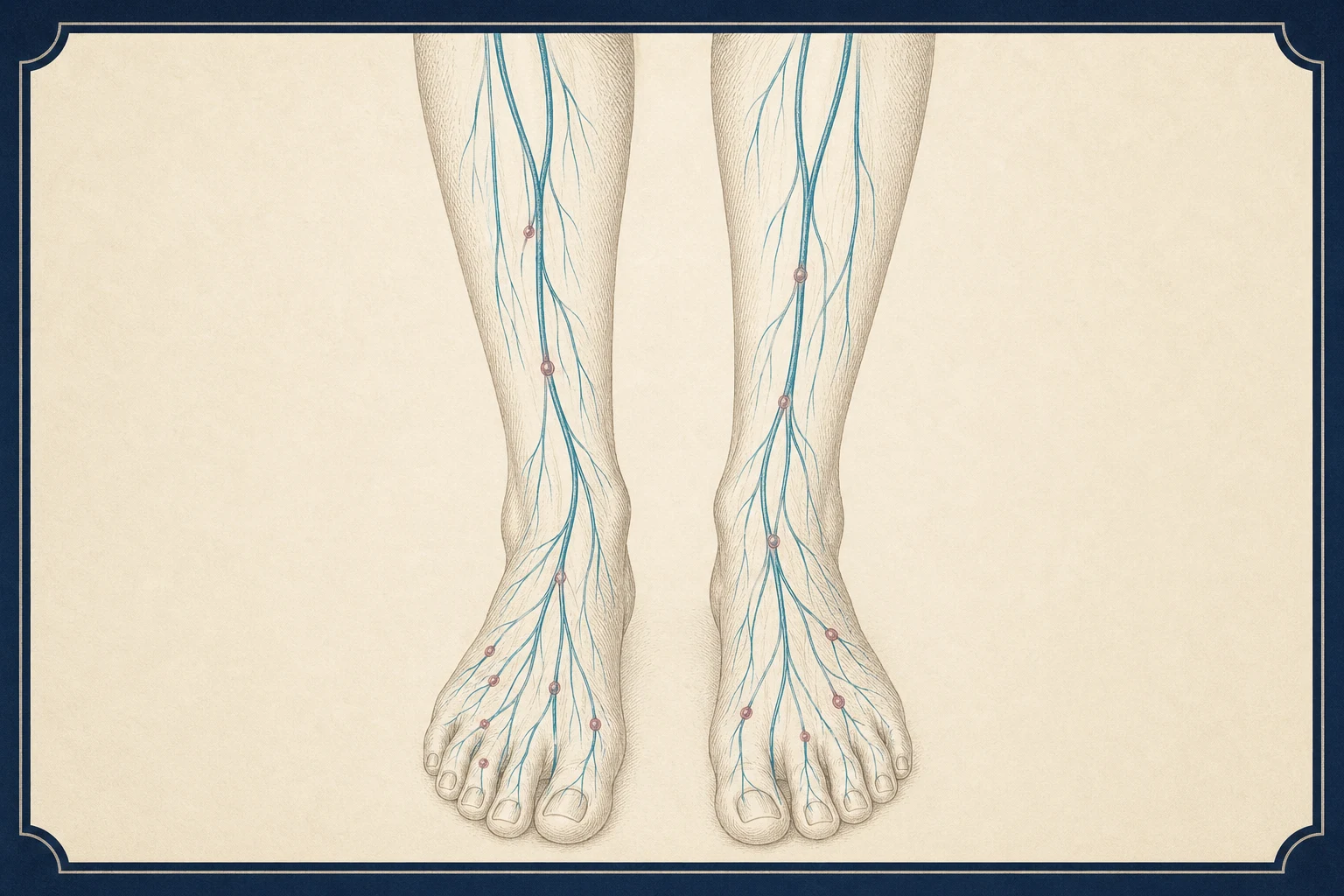
High blood sugar over years damages the small blood vessels that feed nerves and injures the nerves directly. The longest nerves, which run to the toes, are affected first, which is why symptoms follow a "stocking" pattern: the feet, then the ankles and shins, and later the fingertips ("glove"). This pattern is called distal symmetric polyneuropathy and accounts for most diabetic nerve damage.
About 50 percent of people with diabetes develop neuropathy over their lifetime, and 20 to 30 percent of those have pain significant enough to need treatment. It occurs in both type 1 and type 2 diabetes and is sometimes present at the time type 2 is first diagnosed, because glucose may have been high for years beforehand. Prediabetes can cause it too.
Diabetes can also cause other nerve problems: autonomic neuropathy (dizziness on standing, digestive problems, bladder trouble), single-nerve palsies (a drooping eyelid, wrist or foot drop), and diabetic amyotrophy (severe one-sided thigh pain with weakness and weight loss). These need different evaluation and are not what this page covers. Gulf Coast Pain & Spine treats painful diabetic neuropathy in Houston, Webster and Pearland (opening November 2026).
What makes it worse
The strongest predictors are how long you have had diabetes and how high your average glucose (A1c) has been. Other contributors that are worth treating because they are changeable: high blood pressure, high triglycerides, smoking, obesity, heavy alcohol use, vitamin B12 deficiency (common in people taking metformin for years), and kidney disease. Some medications, including certain chemotherapy drugs, add to nerve damage.
Tight glucose control clearly slows neuropathy in type 1 diabetes; in type 2 the effect on established neuropathy is smaller, which is why treating the pain directly matters. Your primary care physician or endocrinologist manages the diabetes; we manage the pain and keep them informed.
Symptoms, and how it differs from look-alikes
Typical symptoms, usually in both feet and roughly symmetric:
- Burning, stabbing or electric pain, worse at night and at rest
- Numbness or a feeling of walking on cotton or pebbles
- Tingling, pins and needles
- Extreme sensitivity, so that bedsheets or socks hurt (allodynia)
- Loss of balance, especially in the dark, from lost position sense
- Later, weakness in the toes and feet, and deformities such as claw toes
Diabetic neuropathy is not the likely explanation when pain is on one side only, starts in the back or buttock and shoots down the leg (sciatica or spinal stenosis), is confined to the sole with first-step morning pain (plantar fasciitis), or comes with cramping in the calves on walking that stops with rest (peripheral artery disease). Many patients have more than one problem, and untangling them is a large part of the first visit. Neuropathy from causes other than diabetes is covered on our peripheral neuropathy page.
How we diagnose it
Diabetic neuropathy is usually a clinical diagnosis. At the first visit we:
- Examine the feet: 10-gram monofilament testing for protective sensation, vibration with a 128 Hz tuning fork at the big toe, pinprick and temperature sensation, ankle reflexes, strength, skin and nail inspection, and foot pulses.
- Review your labs: recent A1c, kidney function, lipids, and vitamin B12 (we order B12 if it has not been checked in the last year, especially if you take metformin). Thyroid function and a serum protein electrophoresis are added if the picture is atypical.
- Order nerve conduction studies and EMG only when something does not fit: one-sided symptoms, rapid progression, significant weakness, or a possible second cause such as a pinched nerve in the back.
- Screen for peripheral artery disease with pulses and, if needed, an ankle-brachial index, because poor circulation changes both the treatment and the urgency of foot care.
Small-fiber neuropathy, in which burning pain is present but nerve conduction studies are normal, is common in diabetes; a normal NCS does not mean your pain is not real.
Treatment options, in order
Treatment has two tracks that run at the same time: slowing the nerve damage (glucose, blood pressure, lipids, smoking, alcohol, B12) and treating the pain. For the pain, we follow the American Academy of Neurology's 2022 guideline and the American Diabetes Association's standards, which name the same first-line drugs. Expect a fair trial of each to take 4 to 8 weeks at an adequate dose. About one in three patients gets meaningful relief from any single first-line drug; combining two from different classes is common. Opioids, including tramadol and tapentadol, are not recommended for diabetic neuropathy by the AAN because of limited benefit and real harms; they are not part of our plan.
- Foot protection and risk-factor control
Daily foot checks, properly fitted shoes, no walking barefoot, podiatry care if sensation is reduced. Work with your PCP or endocrinologist on A1c, blood pressure, lipids, smoking and alcohol.
- First-line oral medication
Duloxetine 60 mg daily (an SNRI; also treats depression and is a good choice with low mood), pregabalin 150 to 300 mg per day in divided doses, or gabapentin titrated to 900 to 3,600 mg per day. Tricyclics (amitriptyline, nortriptyline) at low bedtime doses work well but cause dry mouth, drowsiness and are used cautiously over age 65 or with heart disease. Venlafaxine is an alternative SNRI. Learn more →
- Topical treatments
Capsaicin cream (0.075 percent) or the prescription 8 percent capsaicin patch applied in the office, and lidocaine 5 percent patches or cream on the most painful areas. Topicals add relief with few systemic side effects and are especially useful for older patients.
- Second-line and combination therapy
Combining an SNRI with a gabapentinoid, or adding a sodium-channel blocker such as oxcarbazepine or lacosamide, when a single agent is not enough. Doses are adjusted for kidney function.
- 10 kHz spinal cord stimulation
For pain that persists after at least two medication classes, high-frequency (10 kHz) spinal cord stimulation was FDA-approved in 2021 for painful diabetic neuropathy of the lower limbs. In the SENZA-PDN randomized trial, 79 percent of patients with SCS had at least 50 percent pain relief at 6 months versus 5 percent with medications alone, with benefit maintained at 12 and 24 months; about 6 in 10 also had measurable improvement in sensation. A 5 to 7 day temporary trial comes first; you proceed to an implant only if the trial gives at least 50 percent relief. Medicare and most commercial plans cover it for this indication. This is a treatment, not a test of the diagnosis. Learn more →
What you can do now
- Look at your feet every day, top and bottom (use a mirror), and between the toes. Photograph anything new and show us or your podiatrist.
- Wear shoes indoors and out. Numb feet do not feel the splinter, the hot pavement or the pebble.
- Ask your PCP for your A1c and B12 results and bring them. If B12 is low, replacing it can reduce symptoms.
- Walk. Regular walking (150 minutes a week is the ADA target) improves glucose, circulation and balance; use a treadmill or track if balance is poor.
- Limit alcohol. It is a direct nerve toxin and adds to diabetic damage.
- Give each medication a fair trial. Most fail because the dose was never raised to an effective level or was stopped after a week. Keep a two-week log of pain at night and walking tolerance to bring to follow-up.
New patients can start at new patient information; physicians can use the referral page.
Frequently asked questions
Can diabetic neuropathy be reversed?
Nerve fibers that are lost generally do not grow back, so numbness is usually permanent. Pain, however, can be treated effectively, and getting glucose, B12 and other risk factors under control slows or stops progression. In the SENZA-PDN trial, a majority of spinal cord stimulation patients also had objective improvement in sensation, which was unexpected and is being studied.
Which medication should I try first?
Duloxetine, pregabalin and gabapentin are all reasonable first choices; the pick depends on your other conditions. Duloxetine suits patients who also have depression or anxiety; gabapentinoids suit patients who cannot take antidepressants; tricyclics help sleep but are avoided with heart disease or in older adults. Whichever is chosen, it needs 4 to 8 weeks at a full dose to judge.
What is 10 kHz spinal cord stimulation, and is it approved for diabetes nerve pain?
It is a small implanted device that delivers high-frequency electrical pulses to the spinal cord through thin wires, without the tingling of older stimulators. The FDA approved 10 kHz SCS for painful diabetic neuropathy in July 2021 based on the SENZA-PDN trial. A temporary trial with wires taped to the skin is done first; the implant follows only if the trial succeeds.
Will my insurance cover spinal cord stimulation for diabetic neuropathy?
Medicare and most commercial plans cover it when pain has persisted despite medication and a trial shows at least 50 percent relief. Prior authorization is required and our office manages it. Workers' compensation has its own review process. The practice does not accept Medicaid.
Why do my feet hurt more at night?
There is less distraction, skin temperature changes, and bedsheets brushing hypersensitive skin trigger pain. A bed cradle to lift the covers, a gabapentinoid or tricyclic dosed at bedtime, and a lidocaine patch applied in the evening address the night pattern directly.
Do I need nerve conduction studies?
Not usually. Typical symmetric foot symptoms in someone with known diabetes are diagnosed by exam. We order NCS/EMG when symptoms are one-sided, progressing quickly, involve weakness, or when a second cause such as a pinched nerve in the low back seems possible.
Should I see a podiatrist too?
Yes, if you have any loss of protective sensation on monofilament testing, calluses, deformity or a previous ulcer. Routine podiatry care lowers amputation risk substantially. We coordinate with your podiatrist and PCP.
Sources
- Oral and Topical Treatment of Painful Diabetic Polyneuropathy: Practice Guideline Update (opens in new tab) — American Academy of Neurology, 2022
- Retinopathy, Neuropathy, and Foot Care: Standards of Care in Diabetes (opens in new tab) — American Diabetes Association
- Effect of High-frequency (10-kHz) Spinal Cord Stimulation in Patients With Painful Diabetic Neuropathy: SENZA-PDN randomized clinical trial (opens in new tab) — Petersen EA et al., JAMA Neurology 2021 (PubMed)
- Peripheral Neuropathy (opens in new tab) — National Institute of Neurological Disorders and Stroke
- Diabetes and Nerve Damage (opens in new tab) — Centers for Disease Control and Prevention
Request an appointment
Call (832) 916-2075 or request an appointment online. New patients are welcome; the team confirms insurance and referral requirements before scheduling.